
Choose the Right Hosting for Your Website
A successful website starts with a reliable hosting solution. Web hosting provides the server space and resources required to make a website available online. Whether you are creating a personal blog, business website, online store, portfolio, or content platform, your hosting choice can affect loading speed, uptime, security, and the overall visitor experience.
The right hosting plan should match the size and purpose of your website. A small website may only need basic shared hosting, while a growing business or high-traffic platform may require more powerful resources. Before selecting a provider, consider factors such as storage, bandwidth, performance, security features, scalability, customer support, and pricing.
A carefully selected hosting service gives your website a stable foundation and makes it easier to manage future growth.
Website Speed Matters for Visitors

Website speed is one of the most important considerations when building an online presence. Visitors generally expect pages to load quickly, especially when browsing from smartphones and other mobile devices. Slow pages can make navigation frustrating and may encourage visitors to leave before exploring the website.
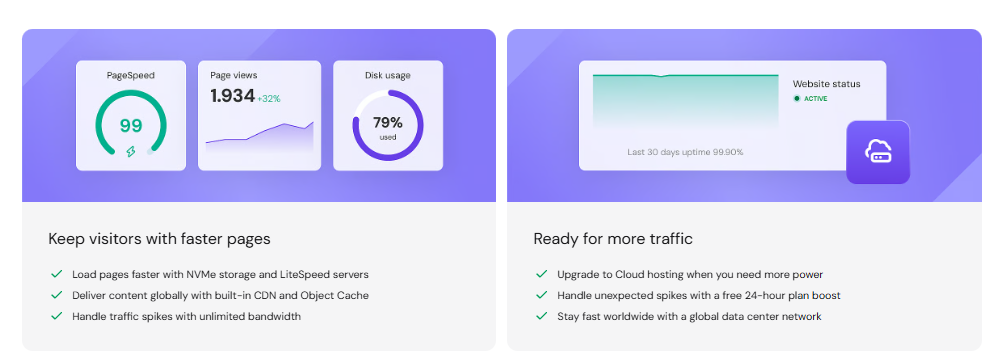
A quality hosting environment can contribute to better performance by providing appropriate server resources and efficient infrastructure. Features such as SSD storage, optimized servers, caching technologies, content delivery networks, and modern server configurations can help improve page-loading performance.
However, hosting is only one part of website speed. Large images, unnecessary plugins, poorly optimized themes, excessive scripts, and uncompressed files can also slow down a website. Combining reliable hosting with good website optimization practices can create a smoother browsing experience.
Reliable Hosting Supports Consistent Availability
Website availability is another major factor when choosing a hosting solution. If a website frequently becomes unavailable, visitors may have difficulty accessing important pages, products, contact information, or services.
Reliable hosting providers generally use infrastructure designed to maintain consistent server operation. Depending on the hosting plan, this may include server monitoring, backup systems, redundant infrastructure, and technical support.
When comparing hosting services, it is useful to examine their published uptime commitments and service information. A provider that offers dependable infrastructure can give website owners greater confidence that their site will remain accessible.
For businesses, consistent availability can be especially important because the website may serve customers throughout the day and night.
Security Features Help Protect Your Website
Website security should be considered from the beginning of any hosting project. Websites can face different risks, including unauthorized access, malware, data loss, and other security problems. A hosting solution with appropriate security tools can help website owners maintain a safer online environment.
Useful security features may include SSL certificates, automated backups, malware scanning, firewalls, secure account access, and regular server maintenance. SSL is particularly important because it helps establish an encrypted connection between visitors and the website.
Website owners should also take responsibility for their own security practices. Strong passwords, updated content management systems, trusted plugins, regular backups, and limited administrator access can reduce common security risks.
Choosing hosting with suitable security options makes it easier to build a website that visitors can use with greater confidence.
Select Hosting That Can Grow With Your Website
A new website may start with limited traffic, but its requirements can change as the audience grows. This makes scalability an important consideration when selecting a hosting plan.
Shared hosting can be suitable for smaller websites because multiple websites use resources on the same server. As traffic and resource requirements increase, a website may eventually need a VPS, cloud hosting, or a dedicated environment.
A scalable hosting provider allows website owners to upgrade resources without completely rebuilding their online infrastructure. Additional storage, processing power, memory, bandwidth, and other resources can become useful as websites gain visitors and publish more content.
Planning for future growth can prevent performance problems and make website management easier over time.
Easy Website Management Saves Time
Managing a website should not become unnecessarily complicated. A hosting solution with a user-friendly control panel can make everyday tasks easier, especially for beginners and small business owners.
Hosting management tools can allow users to manage domains, databases, email accounts, files, backups, security settings, and other website features from a central interface. One-click installation tools can also simplify the process of setting up popular content management systems.
For users who are building websites with platforms such as WordPress, compatibility and management features can be particularly valuable. Easy access to website files, databases, backups, and performance settings can reduce the amount of technical work required.
Good customer support is another important consideration. When a technical problem occurs, responsive support can help website owners identify the issue and restore normal operation more efficiently.
Build a Strong Website Foundation With the Right Hosting
Choosing a web hosting solution is an important step toward building a fast, reliable, and successful website. The right hosting environment should provide suitable performance, dependable availability, useful security features, simple management tools, and room for future growth.
Website owners should compare their current requirements before selecting a plan. Consider the expected traffic, website type, storage needs, technical requirements, security expectations, and potential growth. A small personal website and a busy online store may have very different hosting requirements.
Performance optimization should also continue after hosting has been selected. Compressing images, reducing unnecessary scripts, keeping software updated, using caching, and maintaining clean website resources can all contribute to a better experience.
With a suitable hosting foundation and consistent website management, businesses, creators, and individuals can create an online presence that is prepared to serve visitors and adapt as their goals develop.